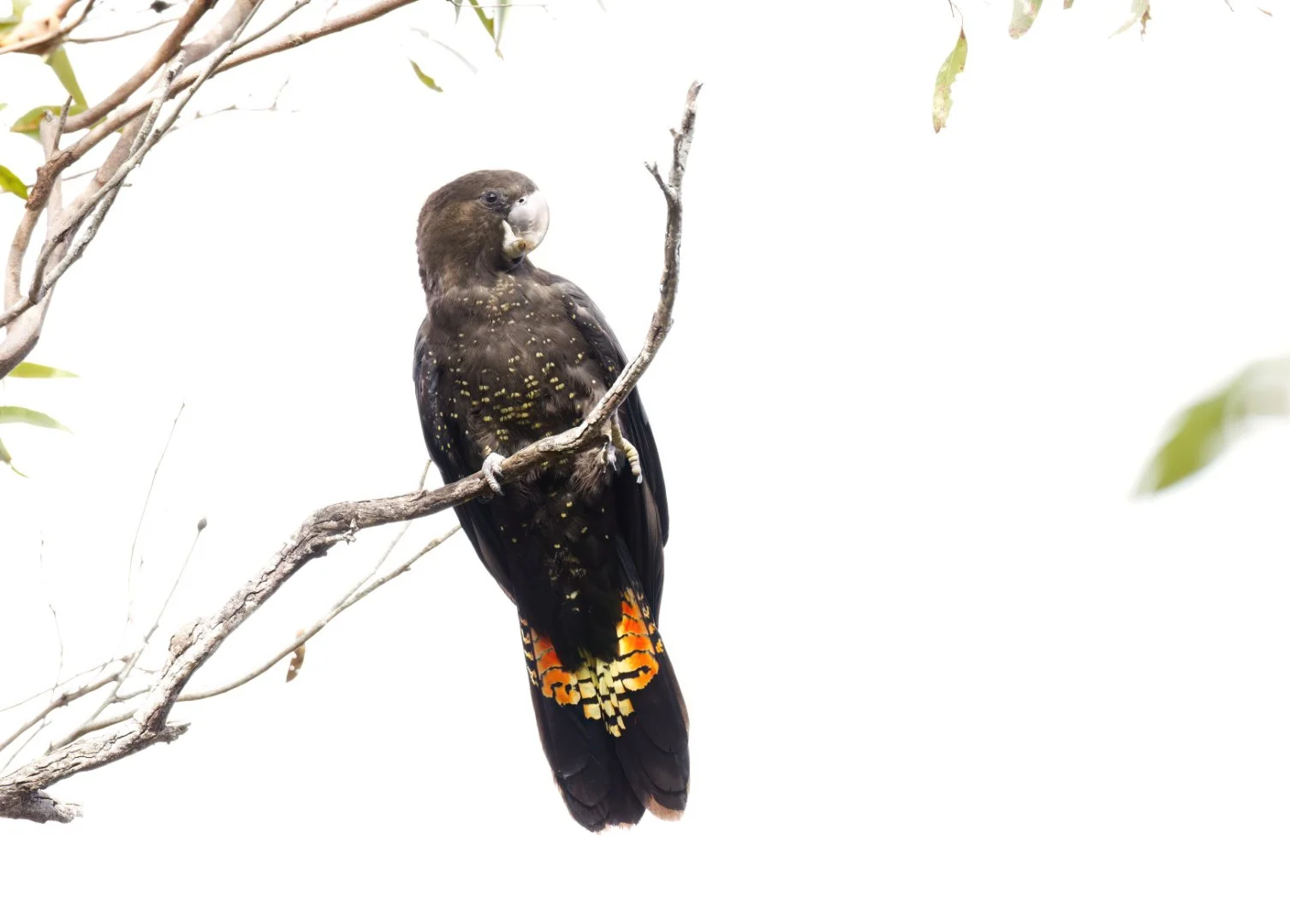
Glossy Black Cockatoo Project
Citizen Science
Monitoring nest sites and protecting habitat in south-east Queensland's Koala Climate Corridor
2026
Project launched
200+
Feed trees mapped
5
Partner organisations
3
Nest sites installed
Why this species needs our help
Vulnerable - South-East Queensland
Glossy black cockatoos rely almost exclusively on cones from just two sheoak species - Allocasuarina littoralis and Allocasuarina torulosa - for food, and on old-growth eucalypt hollows for nesting. Both have been decimated by deforestation and high-intensity fires made more frequent by climate change.
About the project
In 2026, Killarney Bushcare joined the Koala Climate Corridors Initiative: Bunyas to Borders (B2B) Corridor Project, which was initiated by the Lockyer Uplands Catchment Group and supported by The Great Eastern Ranges and the International Fund for Animal Welfare. The project aims to make koalas and other wildlife more resilient to climate change by creating connected habitat corridors.
As part of the project, we have installed 3 different types of artificial nest boxes near known Glossy Black Cockatoo habitat in Killarney, which we will be monitoring using wildlife cameras. Knowing more about which artificial nesting boxes might be accepted by Glossy Black Cockatoos is critical to protect them against the loss of natural tree hollows.
Habitat mapping
Through a citizen science project, we are also creating a map of used and unused feed trees to try and understand the Glossy's feeding behaviour in the area. We are working with the native plant nursery at Condamine Headwaters Landcare Group to propagate seed from these feed trees and encourage landholders to plant them on their properties to create backup feed sources in case of losses in future bushfires.