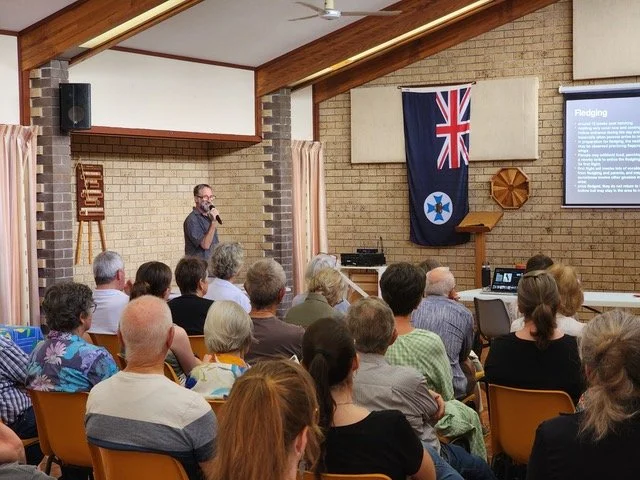
A fantastic turnout this afternoon for our Glossy Black-Cockatoo citizen science workshop.
Community members came together to learn how to identify and support this threatened species, with a strong focus on practical, local action.
Key takeaways:
Identification: Glossies are smaller and quieter than other black cockatoos. Males have striking red tail panels, while females show yellow spotting on the head and neck.
Feeding signs: Participants learnt to spot she-oak feeding activity, including the distinctive chewed cones beneath trees such as Forest Oak and Black She-oak.
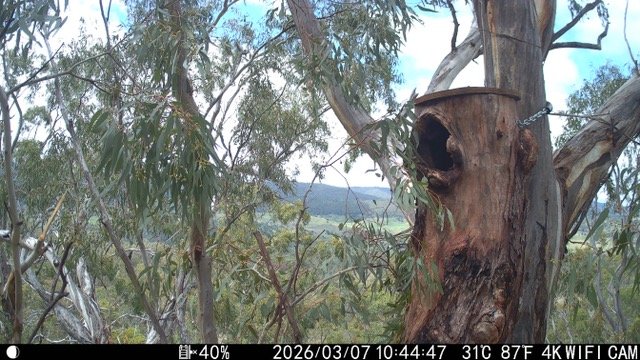
Nesting habitat: We explored the importance of large, old tree hollows in mature eucalypts — critical breeding sites that need long-term protection.
The session also introduced how locals can contribute to citizen science monitoring, helping build a clearer picture of feeding and nesting activity across our region.
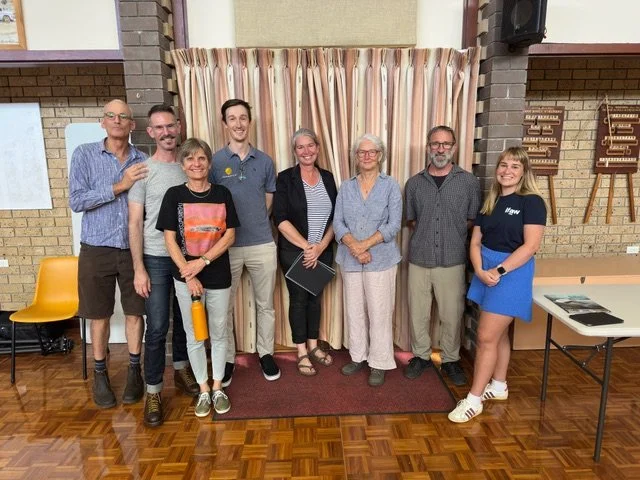
🙏 A big thank you to our speakers Mike Barth and Mitchell Roberts for sharing their knowledge, and to our project partners and sponsors — IFAW, The Great Eastern Ranges, Lockyer Uplands Catchments Inc., BirdLife Australia, and Killarney Bushcare — for their ongoing support of conservation in the Koala Climate Corridor 💚